
How to run Wendler 5/3/1 with Wendler Log
A walk-through of setting up your maxes, running a workout, adding assistance work, and reading your progress over a cycle.

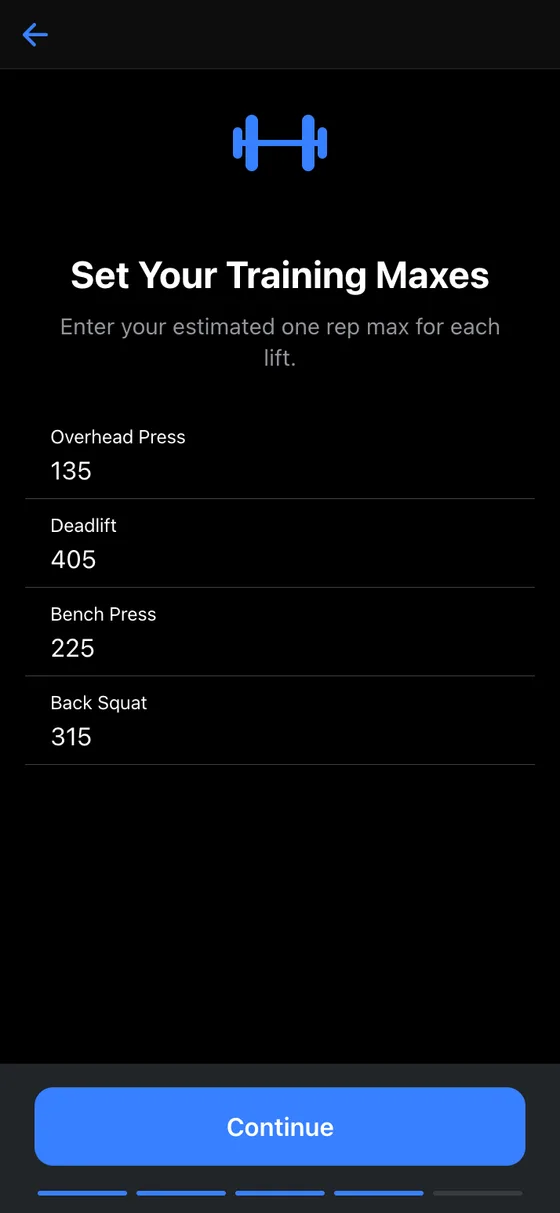
Start with your one rep maxes
Setup asks for four numbers: military press, deadlift, bench press, and back squat. Everything the app calculates afterwards comes from these, so they matter more than anything else you enter.
Use your true one rep max, not what you think you could hit on a good day. 5/3/1 already works off 90% of your max, and it adds weight every cycle. Starting light is not a setback, it is the design. Starting heavy means you spend the first cycle grinding reps with technique that is falling apart, and you stall by cycle three.
If you skipped the intro screens, the same values are under Settings.
Running a workout
The default first lift is the military press; you can reorder the lifts in Settings if your week runs differently.
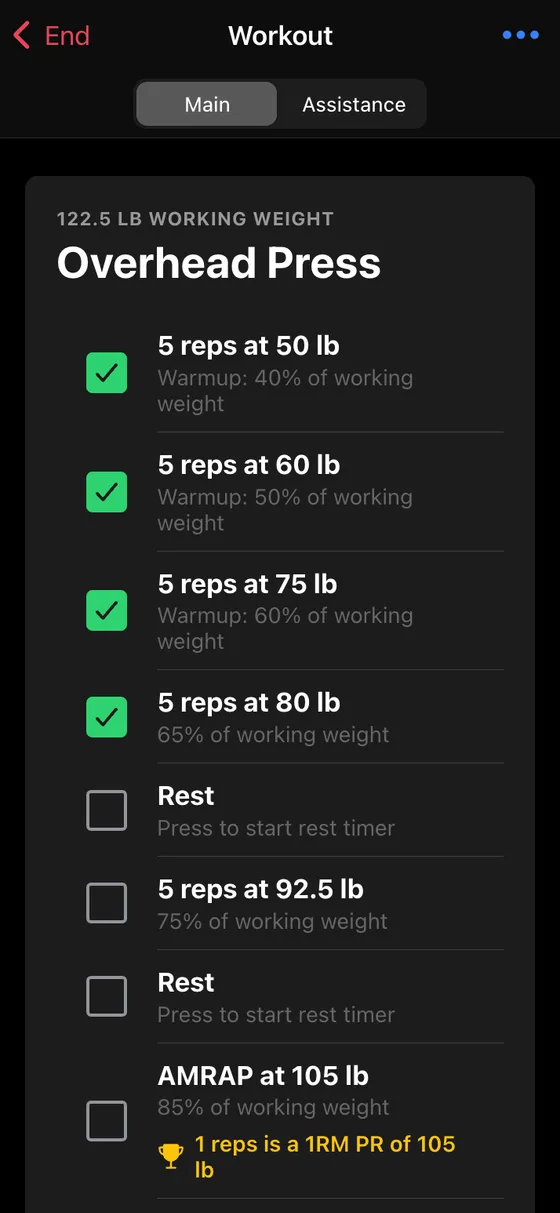
Start at the top with the warm-up sets: 40%, 50% and 60% of your training weight by default, where training weight is 90% of the max you entered. Work down through them, then into your first working set.
After each set, tap the rest button to start the timer. The default rest length is adjustable in Settings if two minutes is too long or too short for how you train.
The AMRAP set
The last working set of each lift is the one that drives the whole program. It is marked as an AMRAP (as many reps as possible) and it is where you actually find out whether you are getting stronger.
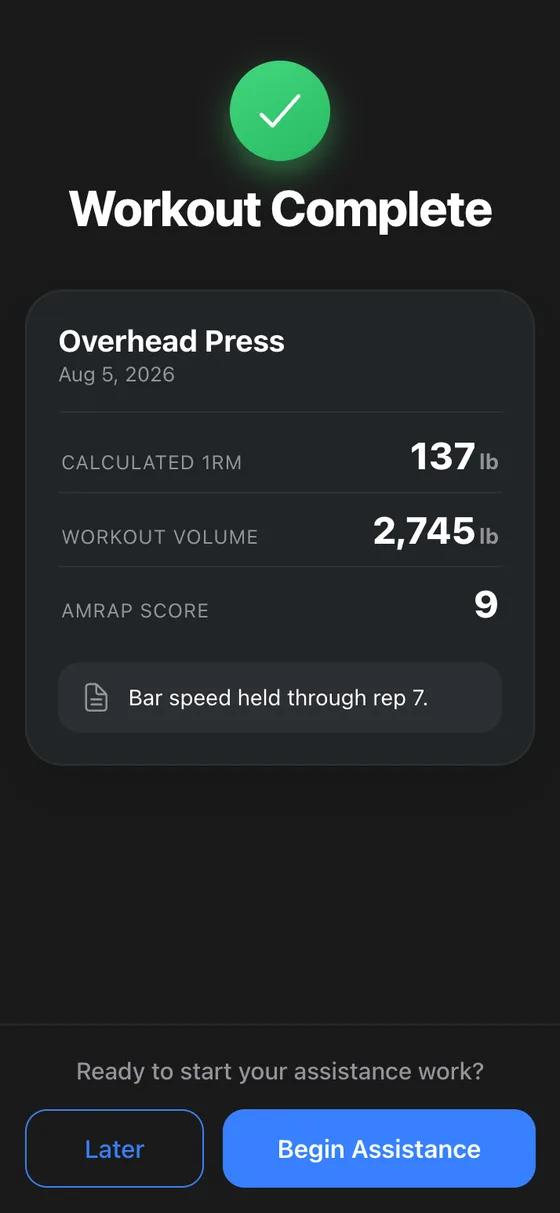
Take it to the point where the next rep would break down, not to the point where you have run out of enthusiasm. Log the number honestly. The app converts your reps and weight into an estimated one rep max, tracks it as a personal record, and from then on tells you how many reps you need on that lift to beat it.
If you want to understand what the app is doing with that number, we wrote up how one rep max estimates are calculated.
Assistance work
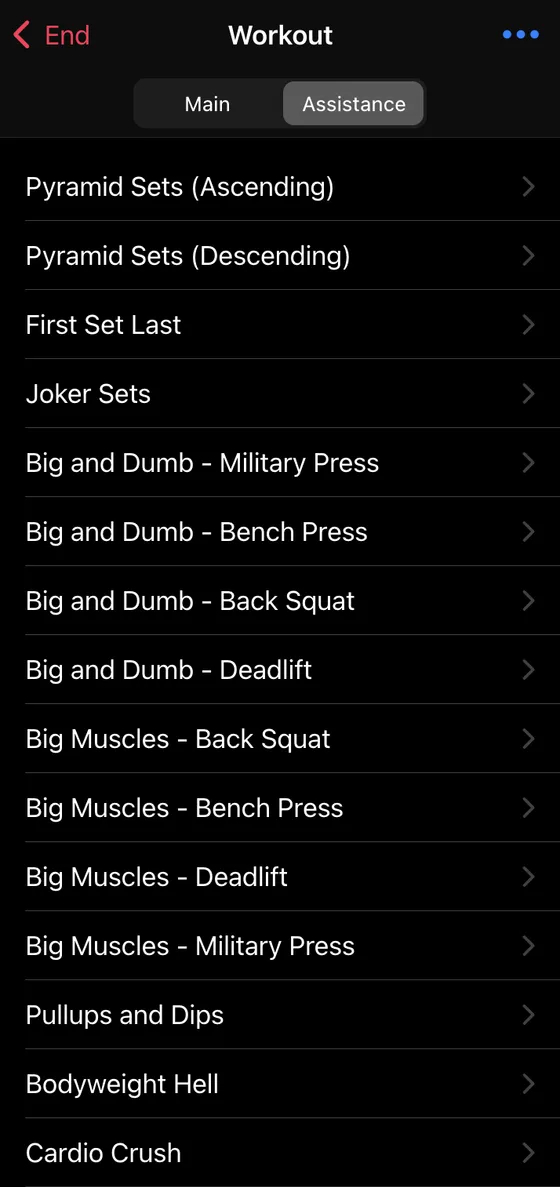
Wendler Log ships with a library of assistance programs covering the common templates. After finishing your main lift, tap Assistance and pick one.
You are not locked into a choice for the cycle. Mix and match week to week. Every stock program is editable, and you can build your own from scratch: exercises, sets, reps, weights, rest timer length, and whether the load is a fixed weight or a percentage of that day's main lift.
The full walk-through is in creating assistance programs.
Reading your progress
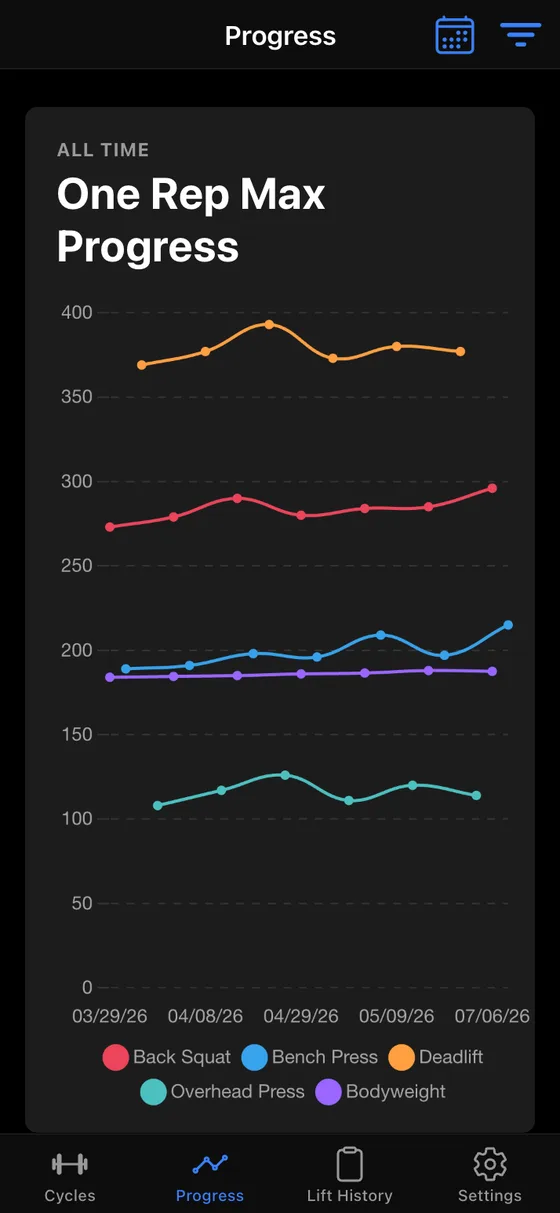
After a couple of weeks of logged lifts the graph becomes useful. It plots your estimated one rep max per lift over time, and can overlay bodyweight so you can see whether strength is tracking with weight gained or moving independently of it.
The History screen holds the detail the graph smooths over: every set, every rep count, every calculated max. You can export the whole log by email if you want to hand it to a coach or a training partner.
A note on the program
5/3/1 was created by Jim Wendler. Wendler Log is an independent app built to run the program; it is not affiliated with or endorsed by Wendler. If you want the reasoning behind the program rather than the mechanics of tracking it, buy the book.
Get the app
Wendler Log is free to download on iPhone and Android. See what it does →