
Couch to 5K
The proven Couch to 5K plan for complete beginners.
Follow the classic Couch to 5K method: three short walk to run sessions a week, an audio coach in your ear, and a 5K finish line in nine weeks.



Starting is the hard part
Most people who try to start running go too hard on day one, hurt for a week, and stop. The plan exists to prevent exactly that. Week one is sixty seconds of running at a time, and it is supposed to feel too easy. The progression does the work, not any single session.
There is nothing to set up and nothing to plan. Open the app, press start, and the first run tells you what to do while you are doing it.
- Nine week plan built from walk and run intervals
- Spoken cues so you never have to look at your phone
- Works with your music and podcasts
- GPS tracking for distance, pace, and your route
- Pause, skip, or repeat an interval with one tap
- History that shows the plan getting easier
What is Couch to 5K?
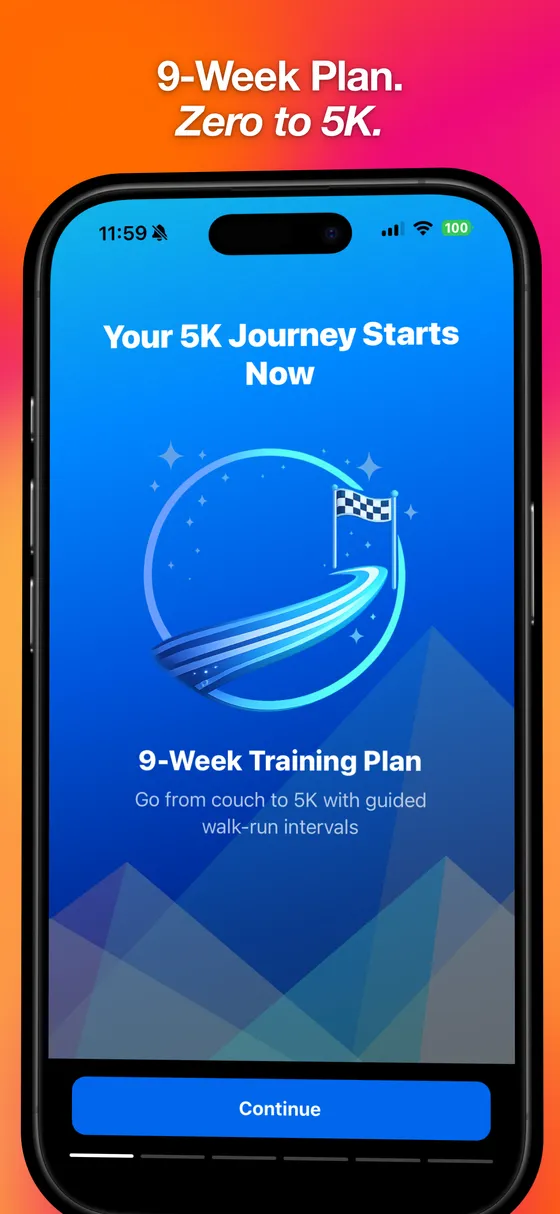
Couch to 5K is a beginner running plan built from walk and run intervals. It was written in the 1990s by Josh Clark for people who had never run, and the shape of it has barely changed since, because it works. You train three times a week with a rest day in between, and each week the running intervals get longer while the walking intervals get shorter.
A 5K is five kilometers, or 3.1 miles. For most beginners that is around thirty minutes of continuous running, which is exactly what the ninth week asks for.
How the nine weeks are built
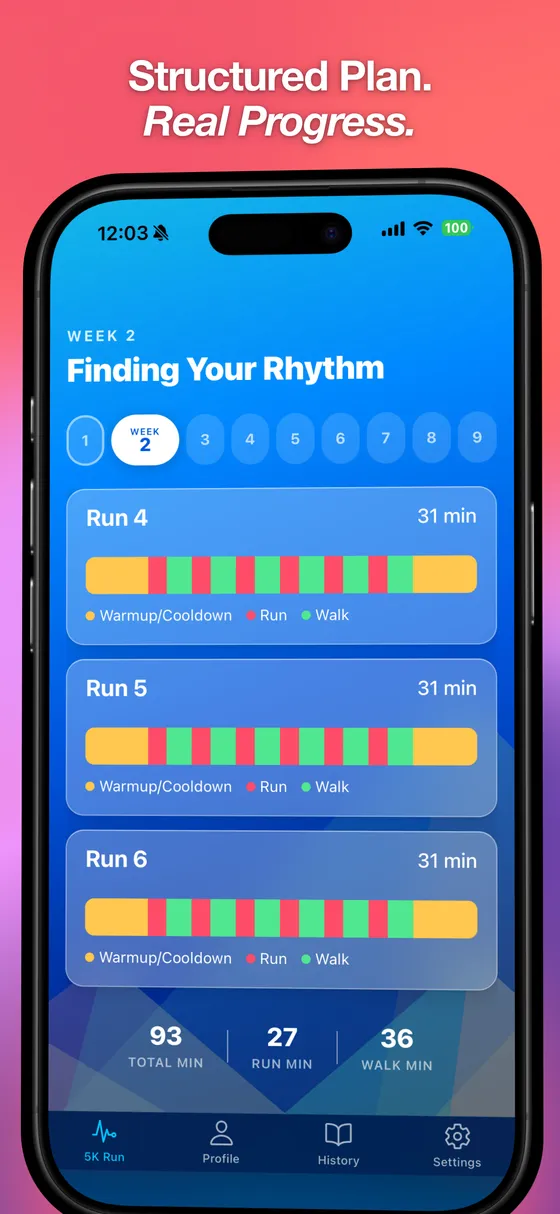
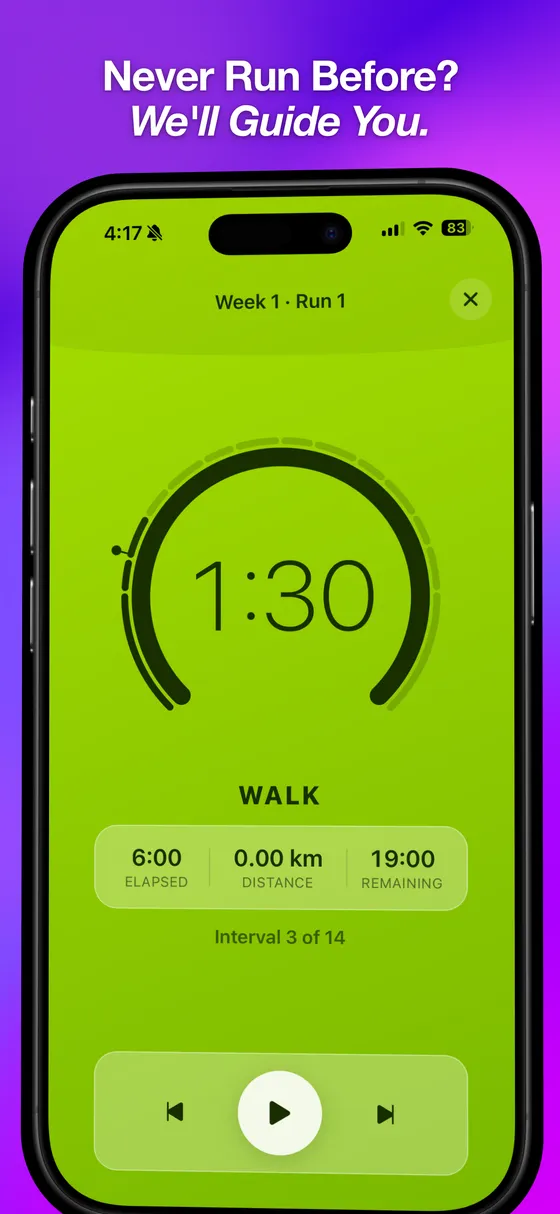
Week one alternates sixty seconds of running with ninety seconds of walking. By the middle of the plan you are running five minutes at a stretch, and in the final weeks the walk breaks disappear altogether.
Every session opens with a warmup walk and closes with a cooldown, so a run takes about half an hour from the moment you leave the door. All three runs for the week are laid out before you start, so you can see what is coming.
The coach counts so you do not have to
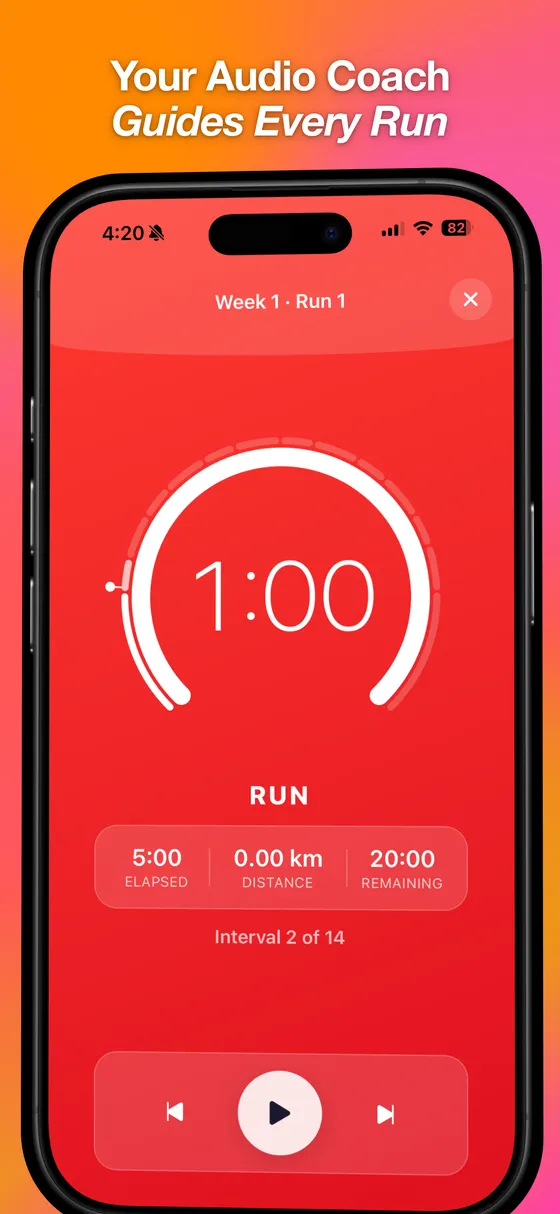
Every interval is announced out loud. You get a cue to start running, a cue to walk, a warning before each change, and a halfway marker so you know when to turn around. Nothing about the plan asks you to look at a screen while you are moving.
The cues play over whatever you were already listening to. Music and podcasts keep going in the background, and the volume steps down for a moment when there is something to say.
Walk breaks are not cheating
The walking intervals are the reason the plan works. They bring your heart rate down far enough that the next run is possible, which is how you get from sixty seconds to thirty minutes without falling apart somewhere in the middle.
Run the running parts slowly. Pace is not what these nine weeks are about, and going faster than a conversational effort is the most reliable way to make week four hurt.
Outside or on a treadmill
The intervals are timed rather than measured, so the plan works anywhere. On a treadmill or an indoor track you just follow the cues. No GPS signal is required, and nothing breaks if you lose one partway through.
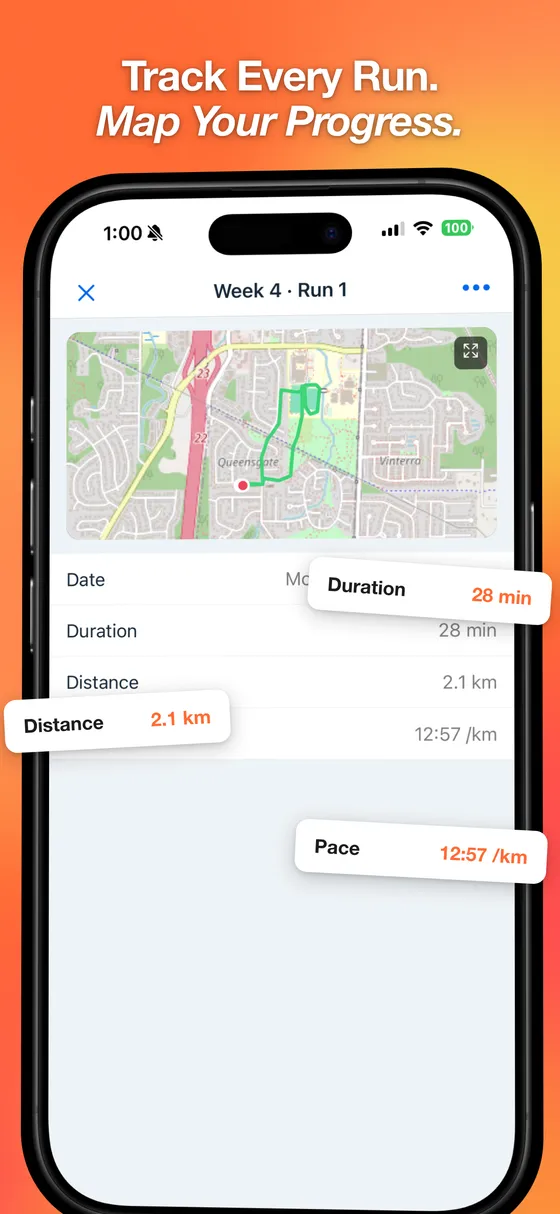
Outdoors, your route is mapped and the distance and pace are recorded alongside the session, so you can see the ground you covered without thinking about any of it during the run.
Proof that it is working
Progress in the early weeks is hard to feel. The runs stay difficult even as you get fitter, because the plan keeps asking for slightly more than last time.
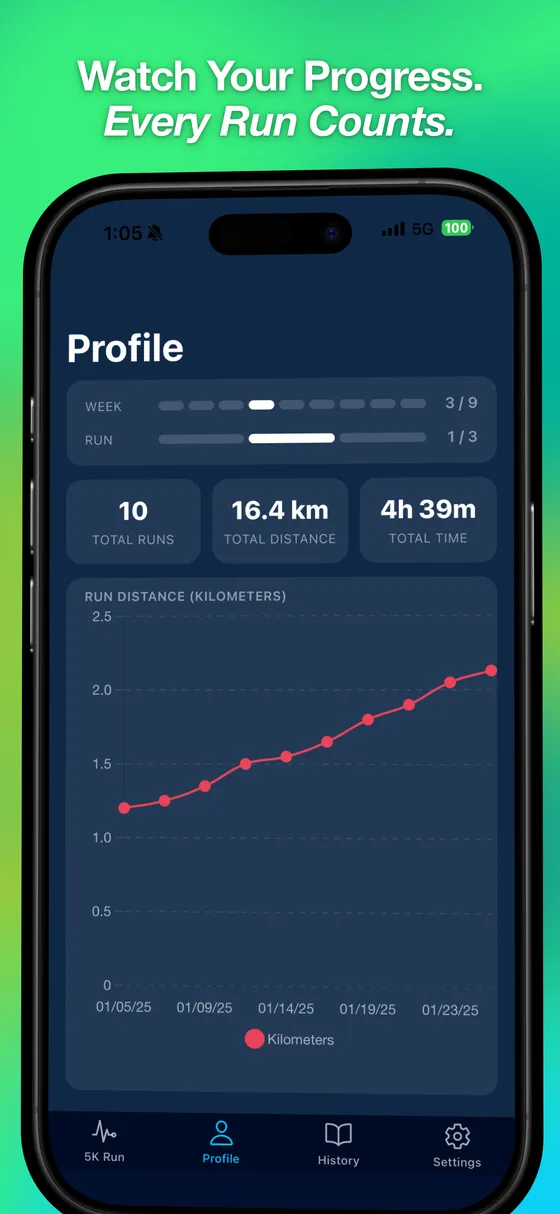
That is what the history is for. Total runs, total distance, and a chart of how far each session took you make the improvement visible on the days when it does not feel like there is any.
After your first 5K
Finishing week nine means you can run for half an hour. That is a real level of fitness and it is worth keeping, which usually means holding on to three runs a week at a distance that no longer worries you.
If you want the next target, the couch to 10K plan uses the same interval structure across fourteen weeks, and the half marathon plan takes it to 13.1 miles from there.
Common questions
How far is a 5K?
How long does the plan take?
Do I need to be able to run already?
What if I can't finish a week?
How many days a week do I run?
Can I listen to my own music?
Do I need a GPS signal?
What should I do after I finish?